
Davis City Directory Collections at a Glance
The defensible Davis city directory spine is the UC Davis Campus Directories collection, identified as AR-087 and documented from 1931 through 2009. It is an institutional directory, so its people, departments, locations, and telephone entries describe the university community rather than every Davis household. Yolo Archives supplies complementary Davis collections and finding aids, but research did not locate an authoritative complete commercial Polk or reverse-directory run with a first year, last year, and publisher list. That gap should remain visible.
| Collection | Years | Where Held | Access |
|---|---|---|---|
| UC Davis Campus Directories, AR-087 | 1931-2009 | UC Davis Special Collections | Aeon and reading room |
| UC Davis yearbooks | 1950-1970 | Yolo County Archives | Reading room; names and activities |
| Davis High yearbooks | 1962-2022, gaps | Yolo County Archives | Reading room; students and faculty |
| School reports | 1865-1949 | Yolo County Archives | Finding aid and reading room |
| Maps, tax rolls, and Davis Sanborn | About 1850s-1970s; Sanborn 1921-1941 | Yolo County Archives | Archive research |
| Commercial Davis city directories | Not verified as a complete run | Ask UC Davis and Yolo staff | Do not assume a year or publisher |
Catalog inclusive dates can describe an entire collection rather than an annual run. Record the title page, edition date, publisher, coverage area, call number, and access status before treating a city directory entry as a comparable year.
The Verified 1931-2009 Davis Directory Run
UC Davis Campus Directories from 1931-2009 are the most secure long span for a Davis city directory search. A campus entry may give a person's name, department or office, campus location, and telephone. It can establish a university affiliation at the edition date. It does not establish ownership, a complete household, or a current Davis address. Student and faculty movement also makes the publication a series of historical snapshots.
Use the UC Davis Archives and Special Collections route rather than assuming every volume is on an open web shelf. Shields Library is at 100 NW Quad, and the research notes list 530-752-1621 and speccoll@ucdavis.edu. Offsite items require an Aeon request at least seven business days ahead. Wait for the item to show “Available in Reading Room” before planning a visit, and photograph the title page and abbreviation key with the entry.
The UC Davis Campus Directories collection record is the source for the documented directory span.
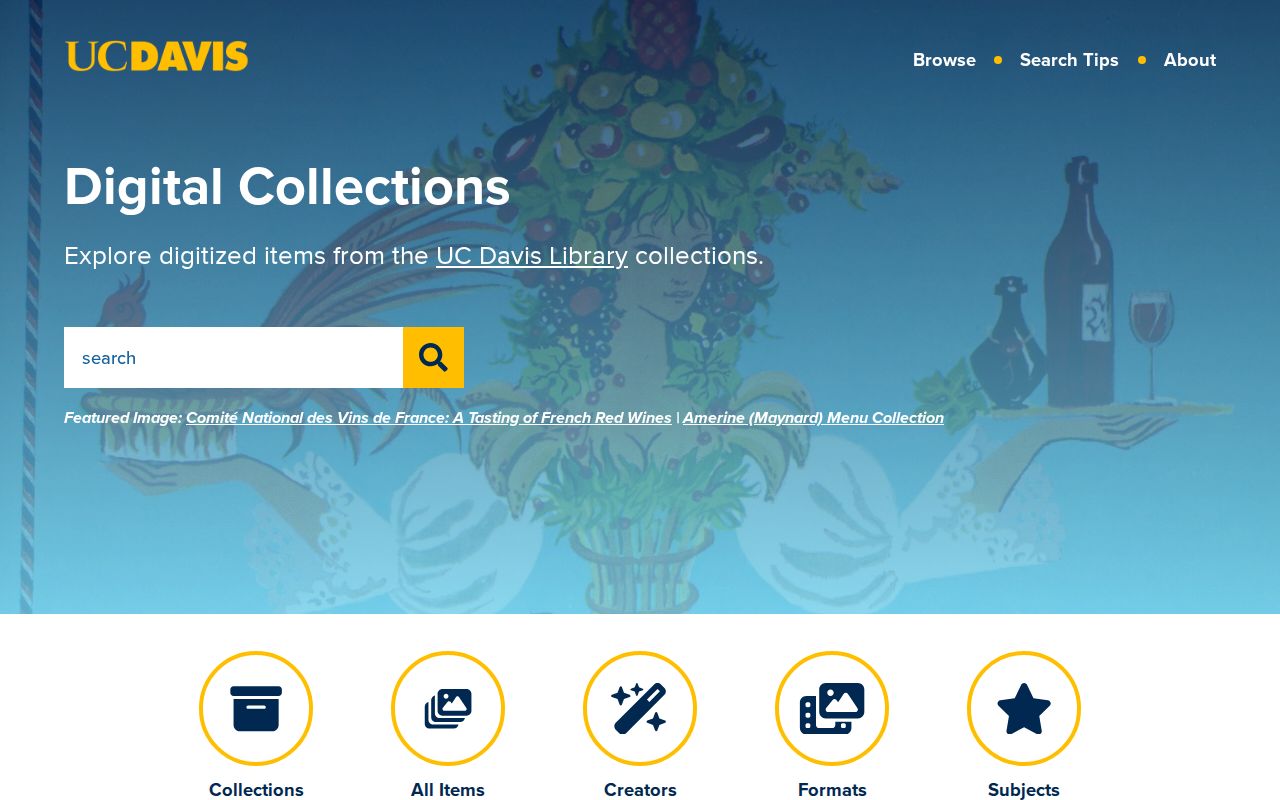
The capture points to an institutional directory whose fields should be quoted as an affiliation and date, not expanded into a claim about the whole household.
UC Davis City Directory OCR Collections
The UC Davis Digital Collections site adds a useful discovery layer to the Davis city directory workflow. The redesigned service supports browsing by collection, creator, format, or subject, with collection context, citations, a book reader, and OCR search. OCR can find a printed name or phrase quickly, but it should be checked against the page image. A machine reading may misread initials, diacritics, a street name, or a column break.
Recent UC Davis digitization news described expanded work on correspondence, paper records, photographs, rare books, Japanese and Japanese-American history, and later additions that include diaries, photographs, directories, and newspapers. Those projects make a city directory search more discoverable while leaving the original collection context important. Save the item title, collection, date, page, and citation so another researcher can repeat the search.
The digital portal's browse and OCR functions are shown in the linked source image.
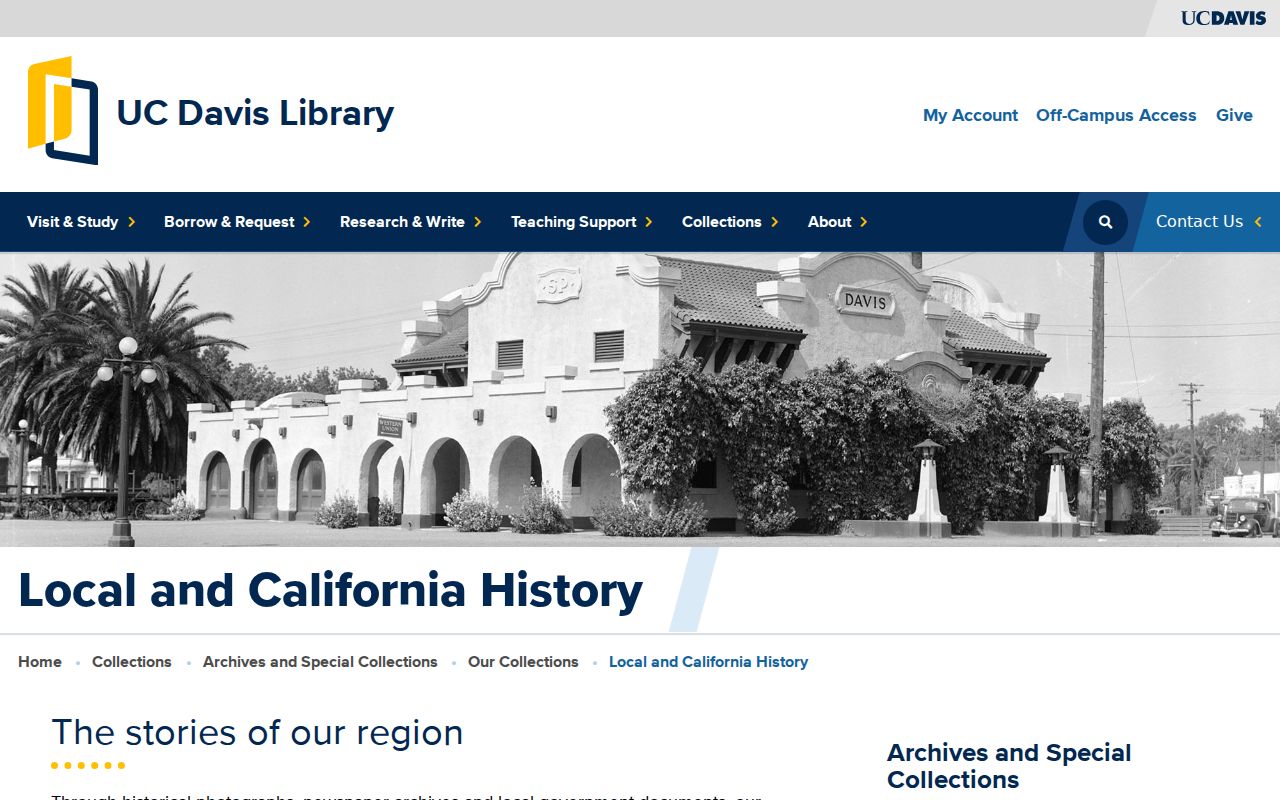
OCR is a finding aid. The scanned page and collection record remain the evidence for a Davis city directory entry.
Davis City Directory Archives and Local History
Yolo County Archives is the local-history counterweight to the university shelf. Its holdings run from the 1850s to the present and include Davis Homes & Businesses, Davis Public Library vertical files, UC Davis subject and Joann Larkey collections, Davis Planning Commission minutes from 1920-1940, assessor rolls and maps, the Davis Sanborn map from 1921-1941, newspapers, school and cemetery material, and databases such as Ancestry and Newspapers.com. These sources can explain a street, parcel, organization, or family when a city directory omits the person.
The Yolo Archives catalog uses simple, advanced, and expert discovery modes, and the Yolo County Library archives guidance adds a route to local holdings. Limit a simple search to Historical Collection or Archives, then repeat with Davis, Davisville, a subdivision, a family, an organization, or a format such as map or photograph. Archive material is noncirculating. Confirm hours, call numbers, reproduction rules, and reading-room availability before traveling.
The archive catalog is the route to holdings that fill the gaps around a Davis city directory year.
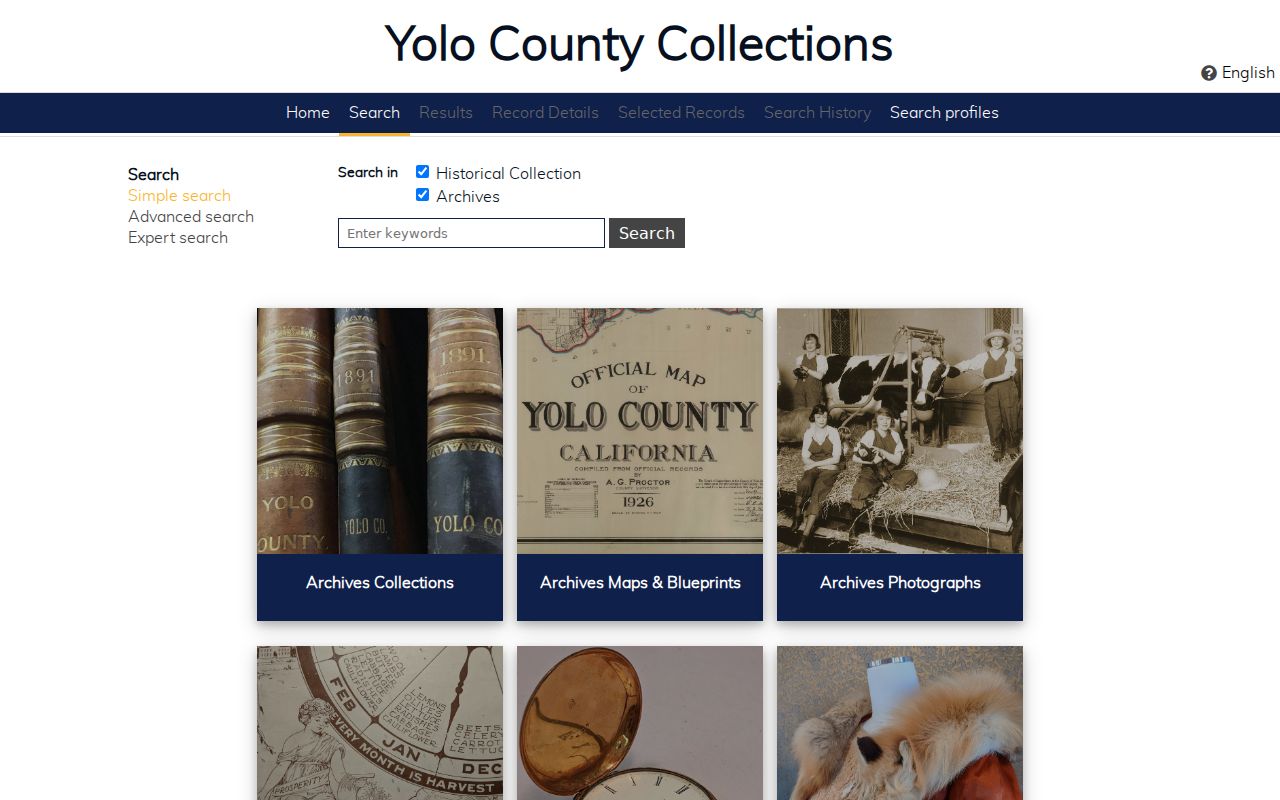
A catalog result establishes custody and context. It does not replace a transcription or scan of the relevant page.
Reading a Davis City Directory Entry
A Davis city directory entry should be transcribed field by field. The verified campus format calls for name, department or office, campus location, and telephone. Traditional city-directory marks may differ by volume. Do not assume that an “h,” “r,” or “wid” notation has the same meaning in every edition, and do not add a spouse, occupation, owner mark, or address that the page does not show. Photograph the volume's key before reading a name.
| Name | Record spelling, initials, diacritics, and any cross-reference exactly as printed. |
|---|---|
| Role or department | For the campus run, note the department or office rather than inferring a broader identity. |
| Location and phone | Capture the campus location and telephone as dated publication fields. |
| Address section | If a volume has a street-order section, record its scope and symbols before searching. |
| Edition key | Use the volume's own abbreviation guide; marks can change between editions. |
- Criss-cross directory
- A reverse section arranged by street or address. A complete Davis commercial run was not verified, so ask a librarian before relying on one.
- Householder index
- An index organized around a head of household or principal entry, with scope defined by that volume.
- Abbreviation key
- The volume's legend for short marks and symbols. Capture it before interpreting an entry.
Davisville Directory Clues Before 1917
Davisville began as a railroad settlement in 1868, and Davis incorporated on March 28, 1917. “Davisville” is therefore more than a historical nickname. It is a search variant for pre-1917 catalogs, newspapers, maps, and family references. A modern city directory query that uses only Davis may miss a record filed under the older name.
Local history also benefits from the documented downtown fire story. A destructive business fire helped drive demand for municipal services, which means Sanborn or rebuilding clues can sit beside early business, deed, planning, and city records. The Davis Sanborn holding covers 1921-1941 and maps structure and use at a date. It does not identify every occupant. Pair the map with a deed, tax roll, directory, newspaper, or probate source.
| 1868 | Davisville is documented as the settlement name. |
|---|---|
| 1917 | Davis incorporates on March 28. |
| 1921-1941 | Yolo Archives holds a Davis Sanborn map series description. |
| 1931-2009 | UC Davis Campus Directories provide the verified institutional run. |
Davis Directory Yearbooks and Obituary Clues
When a Davis city directory does not cover the person or year, yearbooks and obituary sources can supply a human-use trail. Yolo Archives holds Davis High yearbooks from 1962 through 2022 with gaps and UC Davis yearbooks from 1950 through 1970. A yearbook can connect a name to a class, club, portrait, or school date. The county has also reported more than 25,000 obituaries plus church and cemetery records, a substantial offline name index.
The Davis Cemetery District supplies a local burial and interment inquiry route. Cemetery or obituary information is reported evidence, not automatically a legal fact. Pair a relationship claim with a vital copy, probate file, or deed when the distinction matters. Search surname variants, street or business terms, spouse names, organizations, and Davisville.
The cemetery source gives a local way to test a historical name lead after the directory shelf ends.
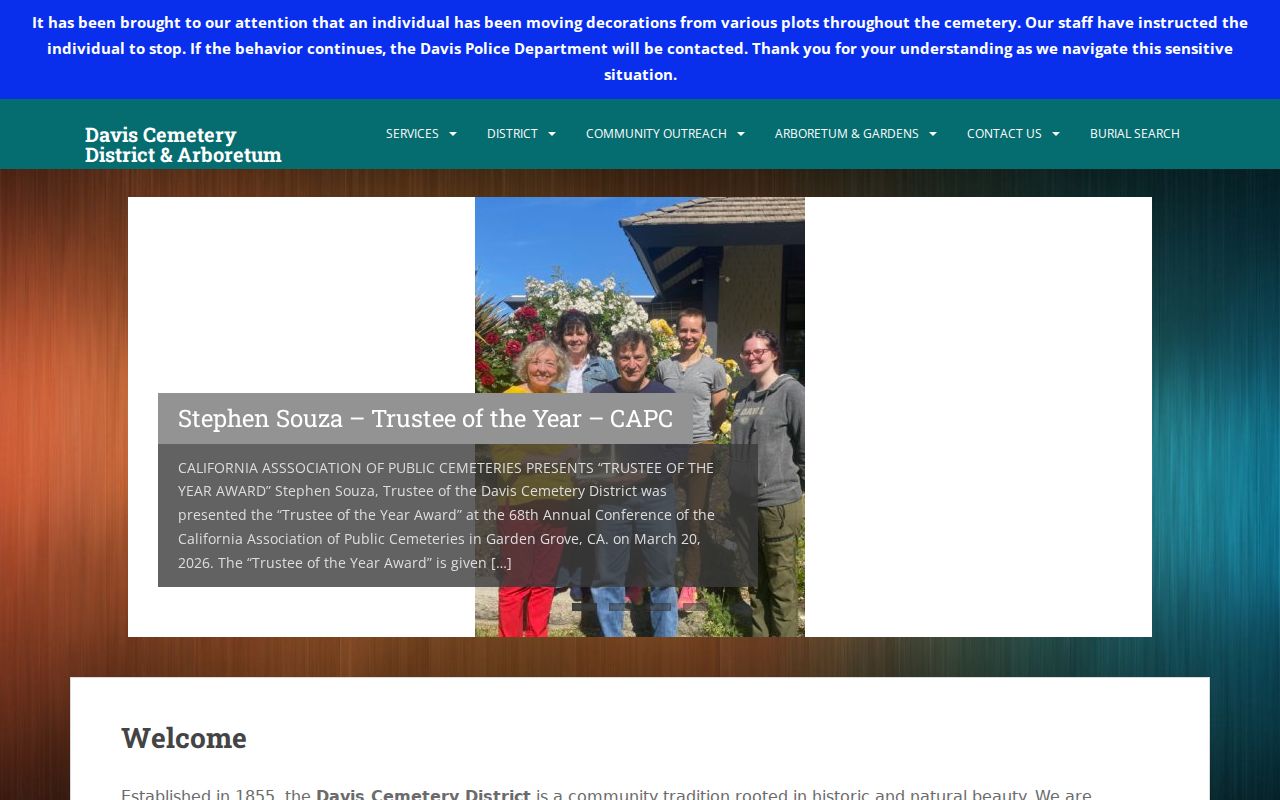
Burial and obituary clues can close a household trail, but the date and source role should remain attached to every note.
Trace a Davis City Directory Household
A city directory is most useful as a sequence of dated snapshots. Start with the exact name and edition. Record the first appearance, last appearance, address or campus location, symbols, and any spelling change. Then compare nearby editions rather than treating an absence as proof of death or departure. A person may have moved, used an initial, fallen outside the publication's coverage, or simply been omitted.
- Photograph the title page, edition date, publisher, coverage statement, and abbreviation key.
- Transcribe the first matching entry with spelling, address, role, and page number.
- Check later and earlier editions for a move, a new initial, or a changed household reference.
- Pair a directory period with the public 1950 census; later federal census responses remain closed under the 72-year rule, with 1960 opening in 2032.
- Test the result against deeds, tax rolls, Sanborn, newspapers, yearbooks, obituaries, probate, or court files.
The strongest household history separates owner, listed occupant, campus affiliate, enumerated household member, and obituary relative. The Davis street directory handles modern APN, GIS, deed, tax, and permit work, while the city directory method stays focused on historical publications.
Requesting Offsite Davis City Directory Material
UC Davis Special Collections lists holdings through catalog and Aeon. Offsite material needs a request at least seven business days in advance and should not be assumed available until the reading-room status changes. Yolo Archives works through its catalog and reading room. Ask for the collection identifier, exact title, edition or box, access status, and reproduction rule. A librarian can also confirm whether a claimed reverse or criss-cross edition truly covers Davis.
There is no verified first or final year for a complete commercial Davis city directory run, and no official catalog source supports substituting dates from Sacramento or another city. Write the gap into the research log. A transparent missing year is more useful than a confident but unsupported publisher claim. Preserve the catalog citation even when the requested volume is absent.
Research note. A directory absence means “not listed in this edition.” It does not prove that a person did not live in Davis during that year.